

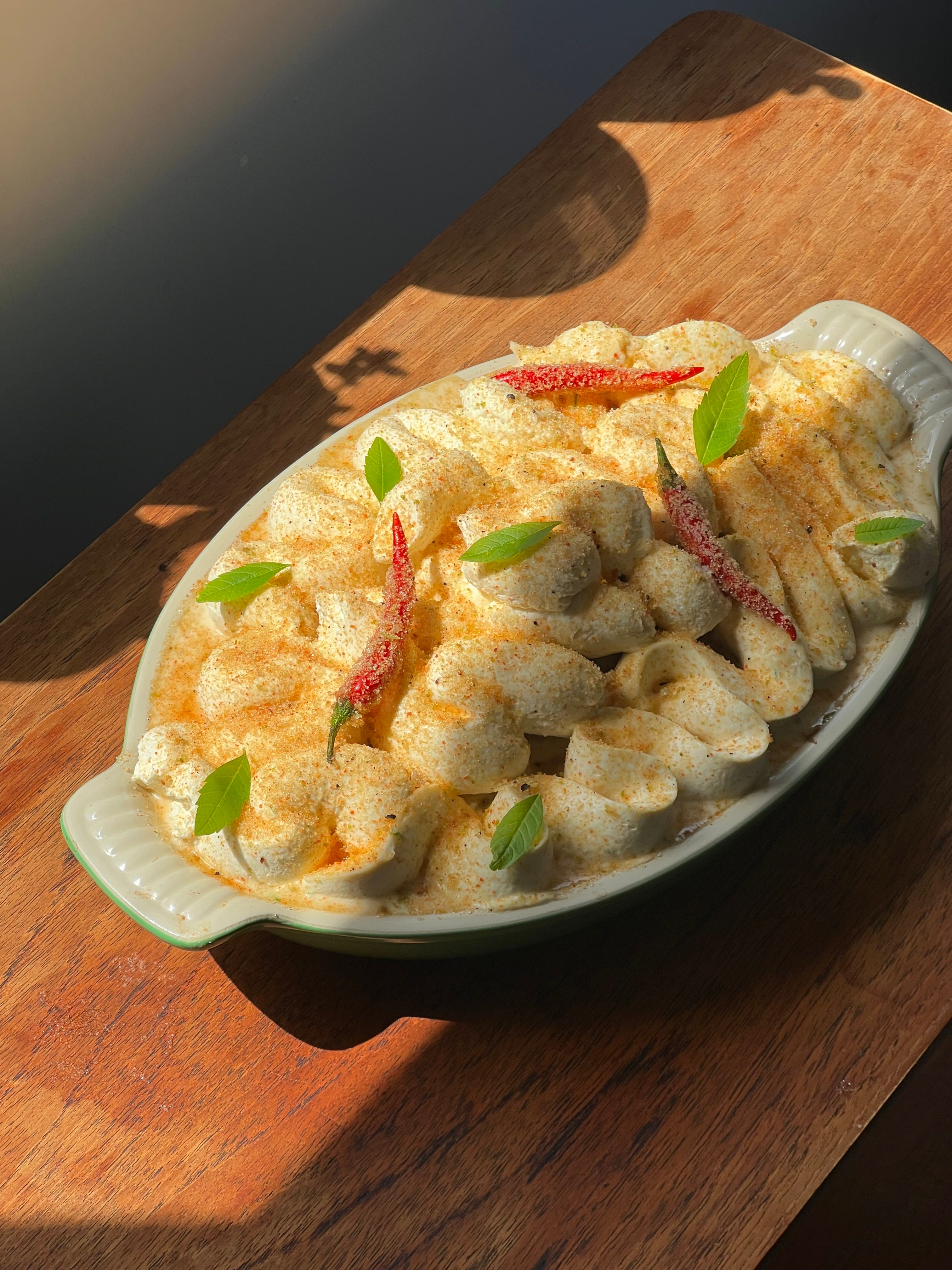
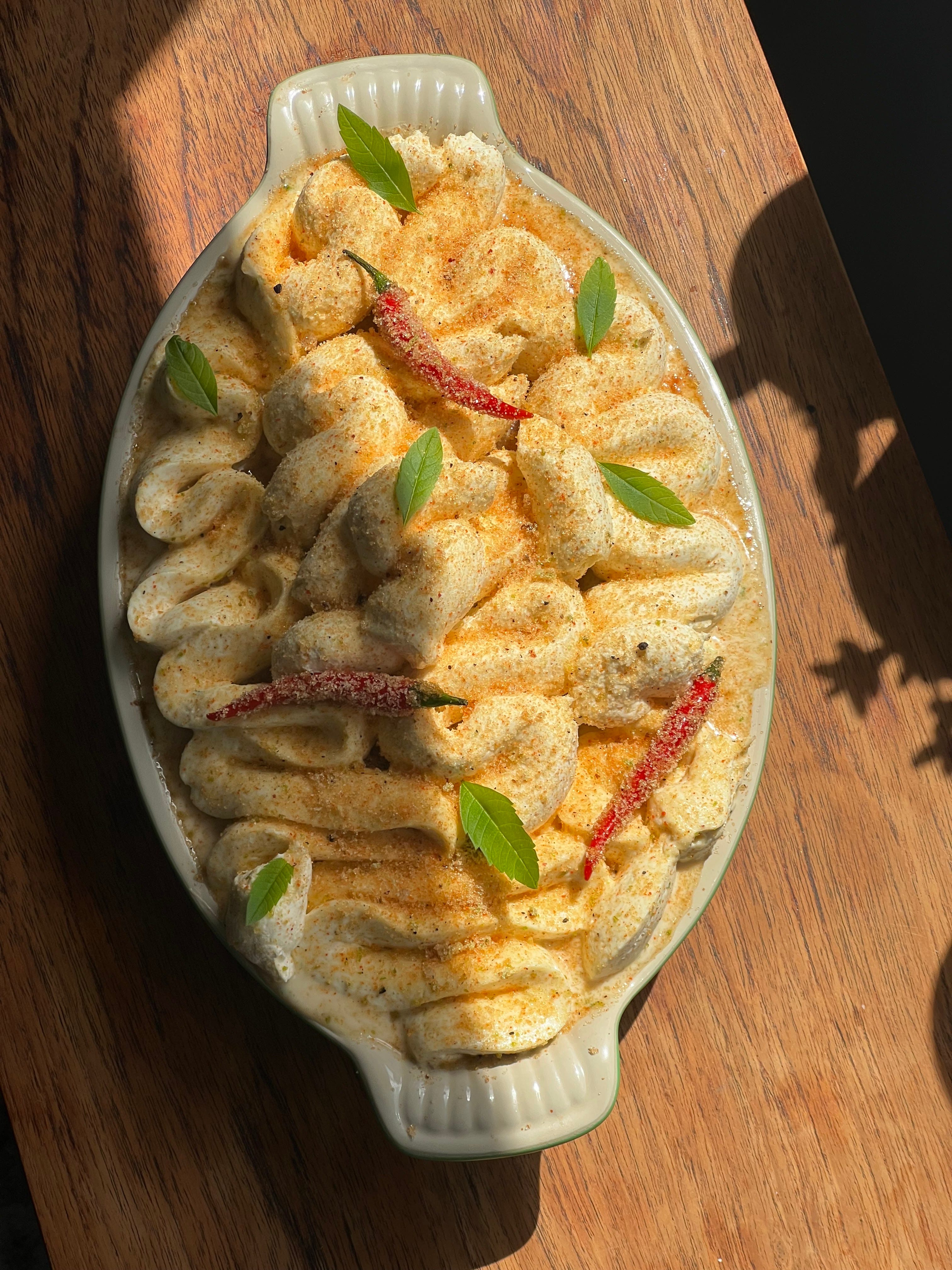
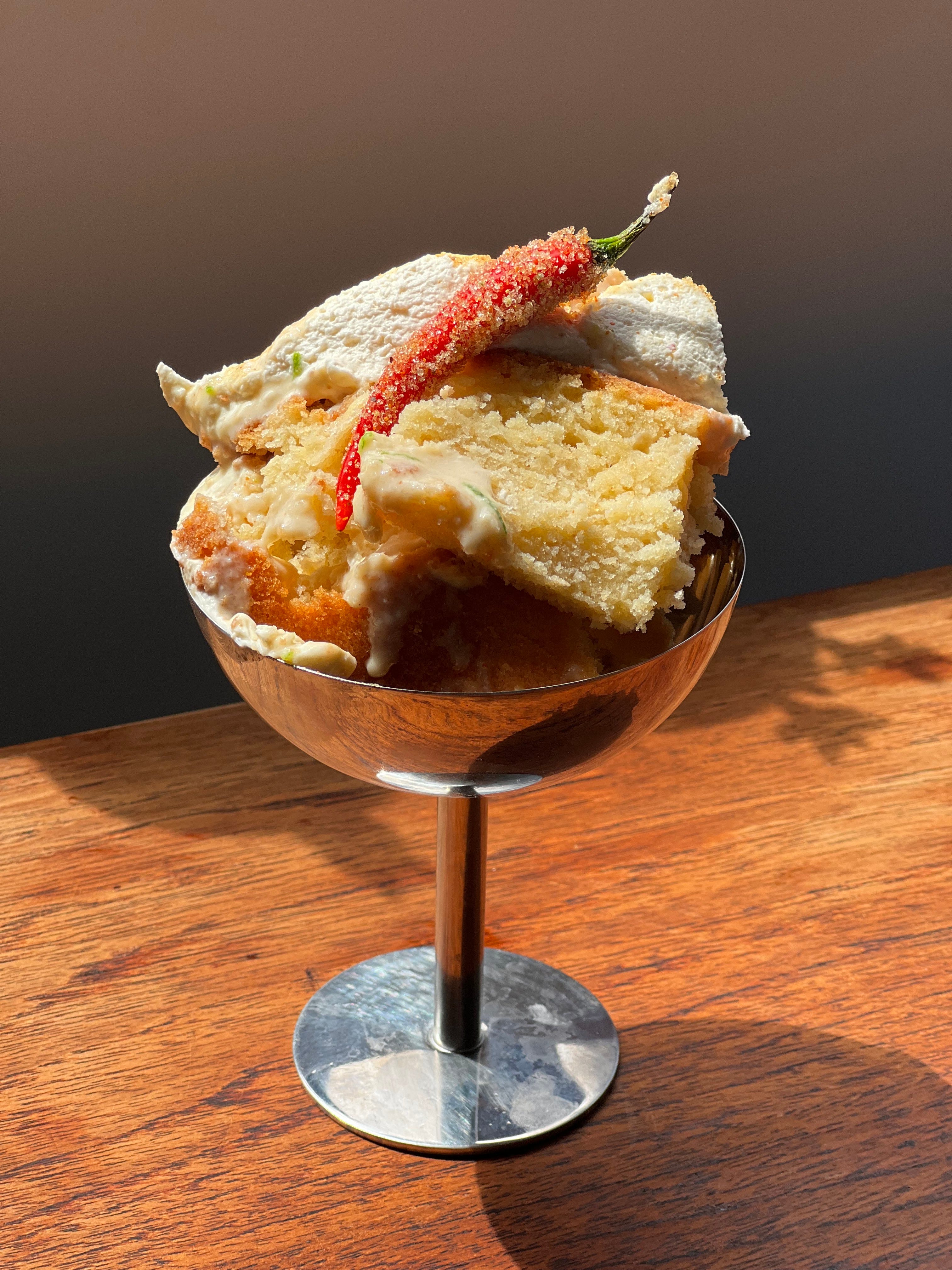
Laksa is one of those dishes that feels impossible to reduce neatly into a single definition. Depending on where you are, it shifts shape entirely. Curry laksa is rich and coconut-heavy, almost velvety. Assam laksa is sharp with tamarind and fish, all brightness and tension. Even within the same city, bowls can taste completely different from one another.
What connects them isn’t strict uniformity but a certain intensity of contrast. Richness against acidity. Spice against sweetness. Fresh citrus against deep savoury warmth.
Which is probably why laksa translates so strangely and so naturally into dessert.
A lot of the flavours already exist there waiting to be noticed differently. Coconut is obvious, of course, but lemongrass has a softness that can feel almost floral when sugar enters the picture. Ginger becomes warming rather than spicy. Tamarind behaves similarly to passionfruit or sour cherry, bringing acidity that sharpens sweetness instead of competing with it. Kaffir lime leaf carries the same kind of fragrant volatility you find in orange blossom or jasmine.
The more I thought about it, the more tres leches felt like the only possible format for this.
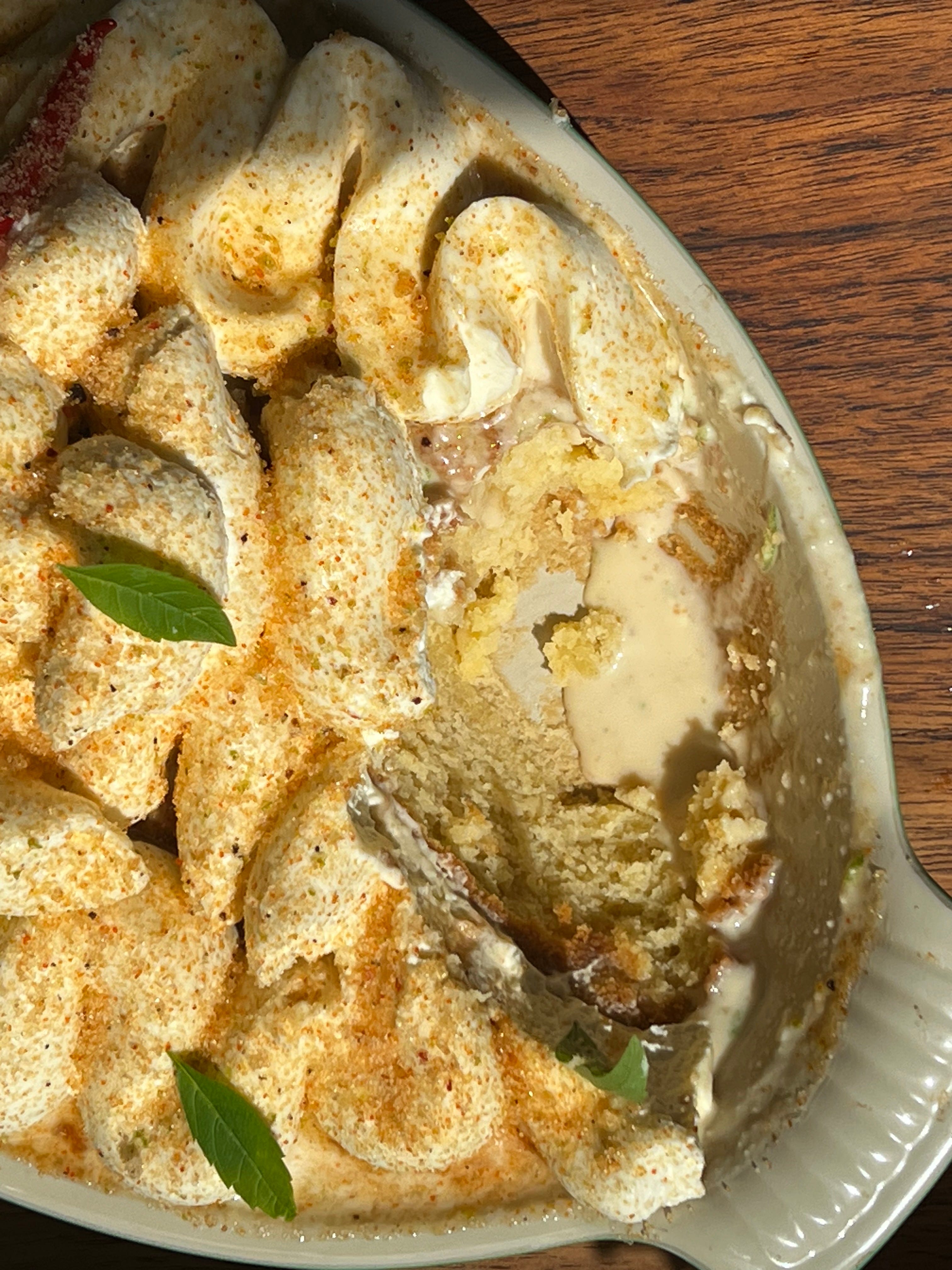
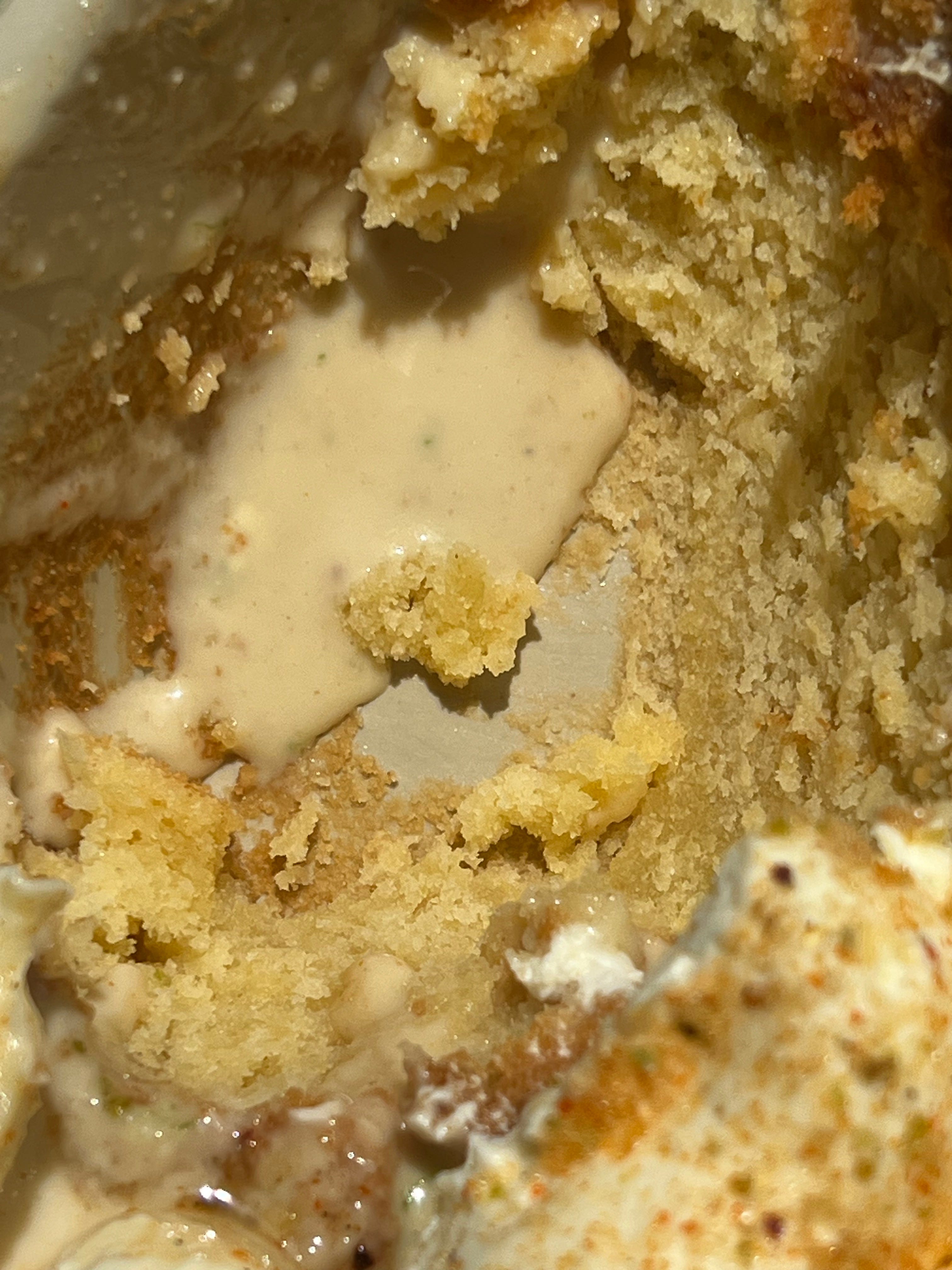
Tres leches cake is fundamentally about absorption. A sponge exists purely to carry liquid to hold richness without collapsing under it. And laksa is also, in its own way, about saturated flavour. Broths infused deeply enough that coconut, spice, citrus and aromatics stop reading individually and become one continuous thing.
So the cake became a kind of meeting point between the two.
The sponge itself is soft and coconut-heavy, designed less as a standalone cake and more as structure for the milk soak. The tres leches coconut milk, condensed milk and evaporated milk is infused with ginger, lemongrass and kaffir lime leaf until it tastes almost hauntingly familiar. Not savoury exactly. Just layered.
Then everything gets finished with tamarind and lime cream because richness without acidity is exhausting. The tamarind sharpens the entire cake and keeps the condensed milk from becoming cloying. Over the top goes lime-black pepper-chilli sugar: citrus oils, warmth, texture, heat. The kind of finish that makes you immediately want another bite.
I think what interests me most about transforming dishes like laksa into dessert is that it reveals how artificial the boundary between sweet and savoury can be. We tend to categorise flavours according to context rather than chemistry. Coconut belongs comfortably to both curry and ice cream. Citrus belongs everywhere. Spice has always moved freely between courses in many cuisines long before European pastry traditions narrowed sweetness into something softer and more singular.
Dessert doesn’t have to lose complexity in order to remain dessert.
If anything, laksa proves the opposite.
Laksa Tres Leches
Coconut Sponge
Ingredients
200g plain flour
1½ tsp baking powder
150g caster sugar
3 eggs
120ml coconut milk
100g melted butter
Pinch of salt
Method
Heat the oven to 170°C.
Whisk the eggs and sugar until pale and thick.
Fold in the coconut milk and melted butter.
Add the flour, baking powder and salt.
Bake until golden and springy, around 25–30 minutes.
Cool slightly before soaking.
Laksa Tres Leches Soak
Ingredients
200ml coconut milk
200ml evaporated milk
150ml condensed milk
2 stalks lemongrass
30g ginger, sliced
4 kaffir lime leaves
Method
Bruise the lemongrass lightly.
Combine all ingredients in a saucepan and warm gently until steaming.
Leave to infuse for 20 minutes.
Strain and cool slightly.
Pour slowly over the cake until fully absorbed.
Tamarind & Lime Cream
Ingredients
300ml double cream
2 tbsp tamarind concentrate
Zest of 2 limes
Icing sugar to taste
Method
Whip the cream to soft peaks.
Fold through the tamarind, lime zest and icing sugar.
Spoon generously over the soaked cake.
Lime, Black Pepper & Chilli Sugar
Ingredients
2 tbsp caster sugar
Zest of 1 lime
Fresh cracked black pepper
Pinch of chilli flakes
Method
Rub everything together until fragrant and scatter over the top before serving.
There’s something deeply satisfying about desserts that confuse people slightly before they seduce them. The first bite tastes unexpected. The second makes sense. By the third, you stop trying to categorise it at all.
You are always welcome at this table,
Love,
Fiona


